
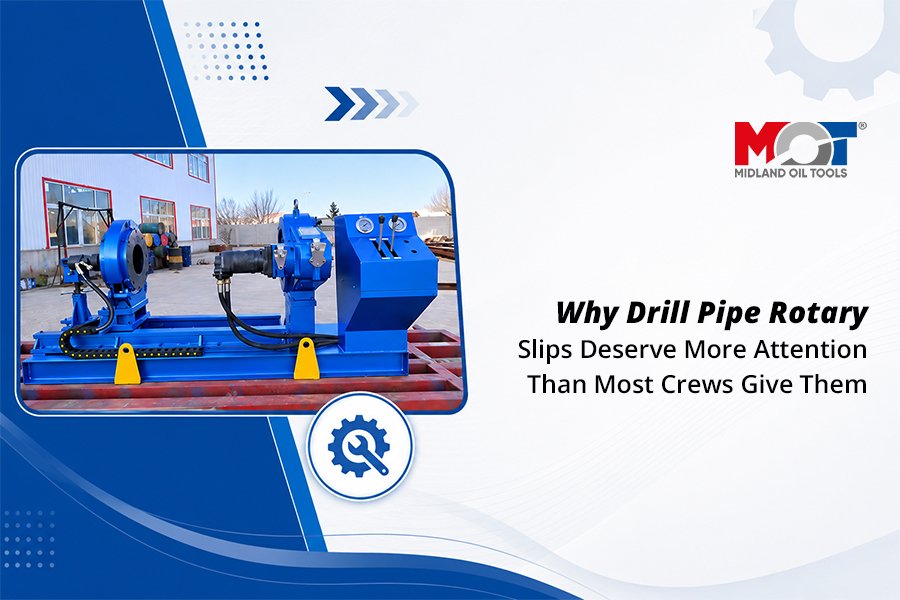
Rotary slips sit at the rotary table on every trip in and out of the hole. Every single one. That repetition is exactly why they get taken for granted — familiar equipment, routine operation, nothing dramatic happening most of the time. The problem with that thinking shows up when the insert condition has degraded past where it should be, or the bowl fit isn’t quite right anymore, and suddenly pipe control at the most critical point on the drill floor becomes less reliable than anyone realised.
Drill pipe rotary slips don’t fail most of the time dramatically. They just gradually stop performing the way they should, and crews compensate without really acknowledging that’s what they’re doing.
What Actually Wears Out and Why It Matters
The inserts take the most punishment. Every time the slips close around the pipe, the insert teeth bite into the pipe body to hold the string weight. Over time those teeth round off, the gripping surface reduces, and the force required to hold the same string weight increases. At some point the insert is working harder than it was designed to and the slip set is no longer doing its job properly under load.
Bowl condition matters alongside this. A worn bowl changes how the slip body seats during the closing action — uneven contact across the slip segments means the pipe load isn’t distributed the way the design intended. That unevenness shows up as inconsistent grip, and inconsistent grip on a heavy string is a problem nobody wants to discover at the wrong moment.
Handle operation is the third variable. Slips that require excessive physical effort to open and close — because of worn hinge points, damaged handles, or accumulated grit in the mechanism — slow the operation down and put crew members in awkward positions during a part of the job that already requires proximity to the rotary.
Varco Slips — Why the Name Keeps Coming Up
Varco slips built a reputation across decades of field use that’s hard to argue with in practical terms. The bowl geometry, the insert configuration, the overall build quality — all of it developed through enough operational history that crews who’ve used them tend to specify them again rather than trying alternatives.
What makes Varco slips worth the specification on a serious programme is consistency. The slip body seats correctly in the bowl, the inserts engage evenly across the pipe, and the handle operation stays manageable even when the equipment has accumulated real field hours. That combination of factors means the crew isn’t compensating for equipment behaviour — they’re just doing the job.
Getting Rotary Slip Parts Right
Rotary slip parts sourcing is where operations sometimes cut corners that cost more later. Replacement inserts that aren’t dimensionally correct for the slip body they’re going into don’t grip the way they should. Bowl wear pads that are close enough but not right create the same uneven contact problem as a worn bowl. Handle components that don’t match the original specification, change the operating feel in ways the crew notices immediately.
Genuine rotary slip parts matched to the specific slip model and pipe size range aren’t a detail worth skipping. The slip set is only as good as the components currently in it, and a refurbished set running incorrect parts isn’t actually refurbished — it’s just reassembled.
Midland Oil Tools supplies drill pipe rotary slips, genuine Varco slips, and matched rotary slip parts across standard API pipe size ranges — with inspection records and insert condition documented before anything leaves the yard. Full inventory and technical support available at m-o-t.com.
Rotary slips work quietly in the background of every trip. Make sure what’s sitting at your rotary table is actually up to the job it’s doing.